

Terminal 3, Frankfurt Airport, Germany
For the new Terminal 3 at Frankfurt Airport, Walter K. developed customized seating landscapes for one of Europe’s most significant infrastructure projects.
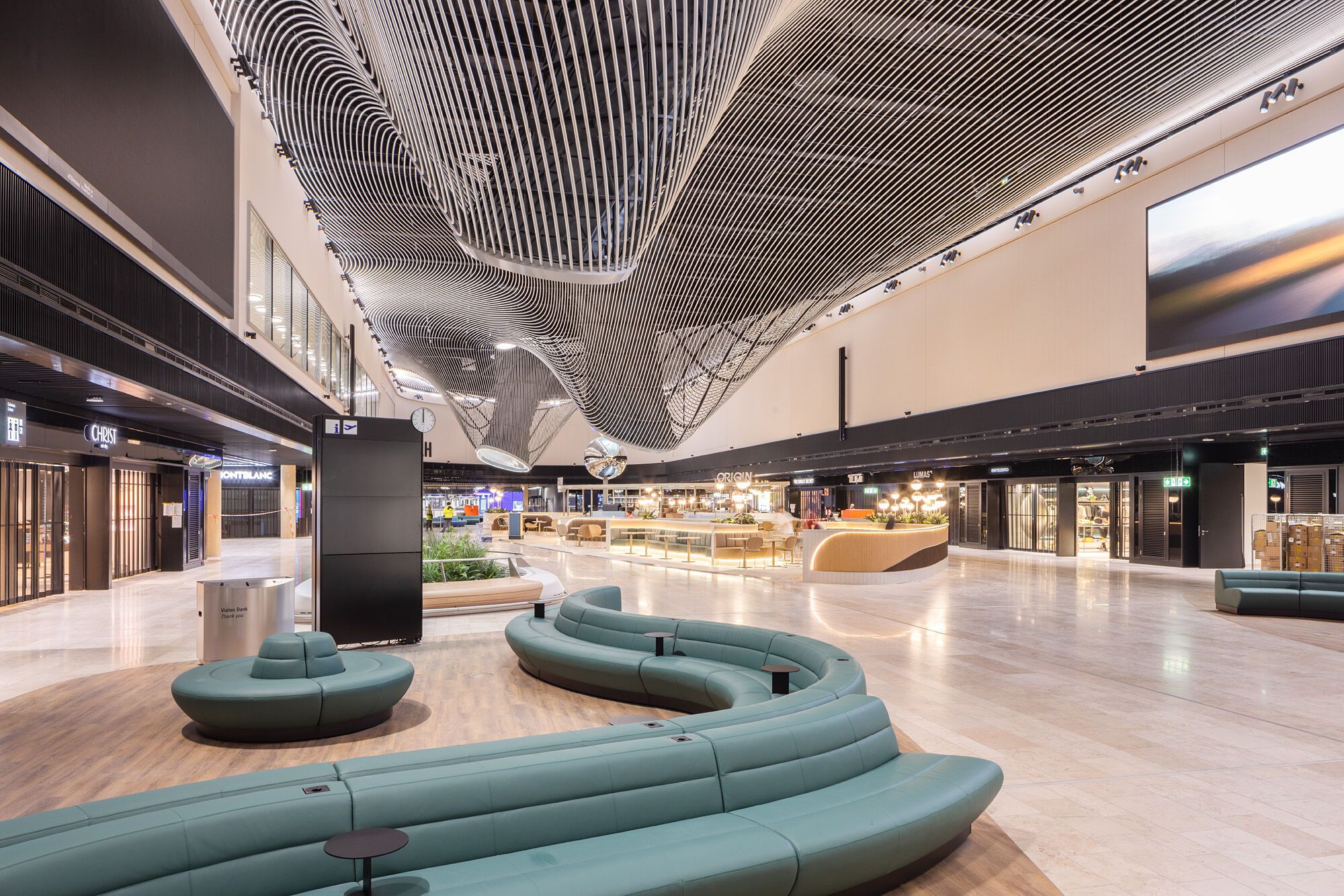
Terminal 3 is creating a new international hub at Frankfurt Airport for millions of travelers each year. Designed by Mäckler Architekten, the project is among Europe’s largest infrastructure projects. Its design brings together the requirements of an international airport with an approach that places the traveler experience at the center. For the terminal’s different areas, Walter K. developed customized seating landscapes that extend throughout the building—from public waiting areas and transit zones to the gates.
A look inside Terminal 3
A new quality of stay
The design of Terminal 3 follows a clear hospitality concept. Time spent in the terminal is understood as part of the journey and should be made as pleasant as possible. Between arrival and departure, spaces take shape that offer comfort and create room for passenger well-being.
Upholstered benches developed specifically for the terminal accompany the different phases of the journey. They offer space for a short pause, for conversation, or for longer waits, responding to the diverse needs of travelers.
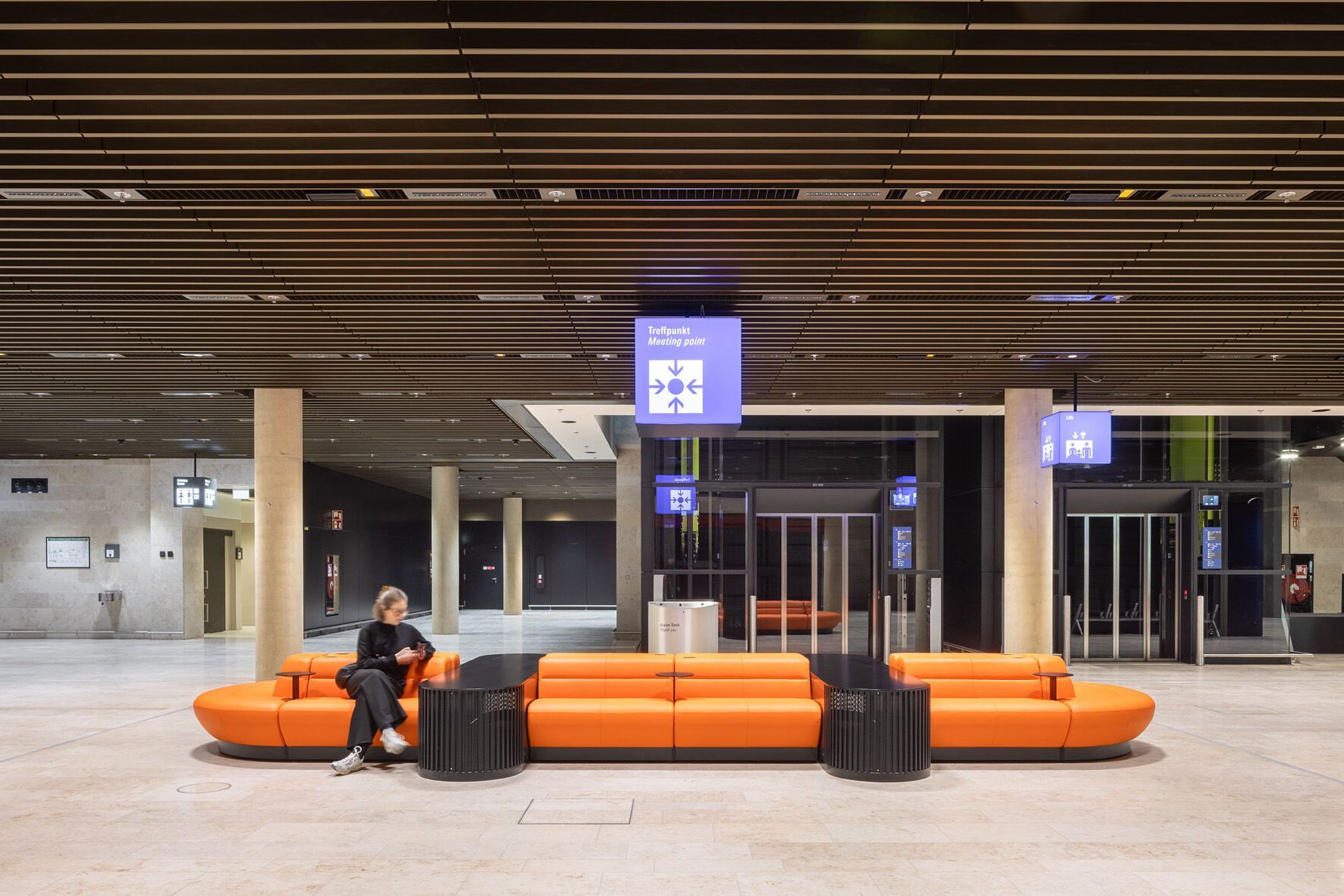
Customized Foster 620 Bench in the terminal landside
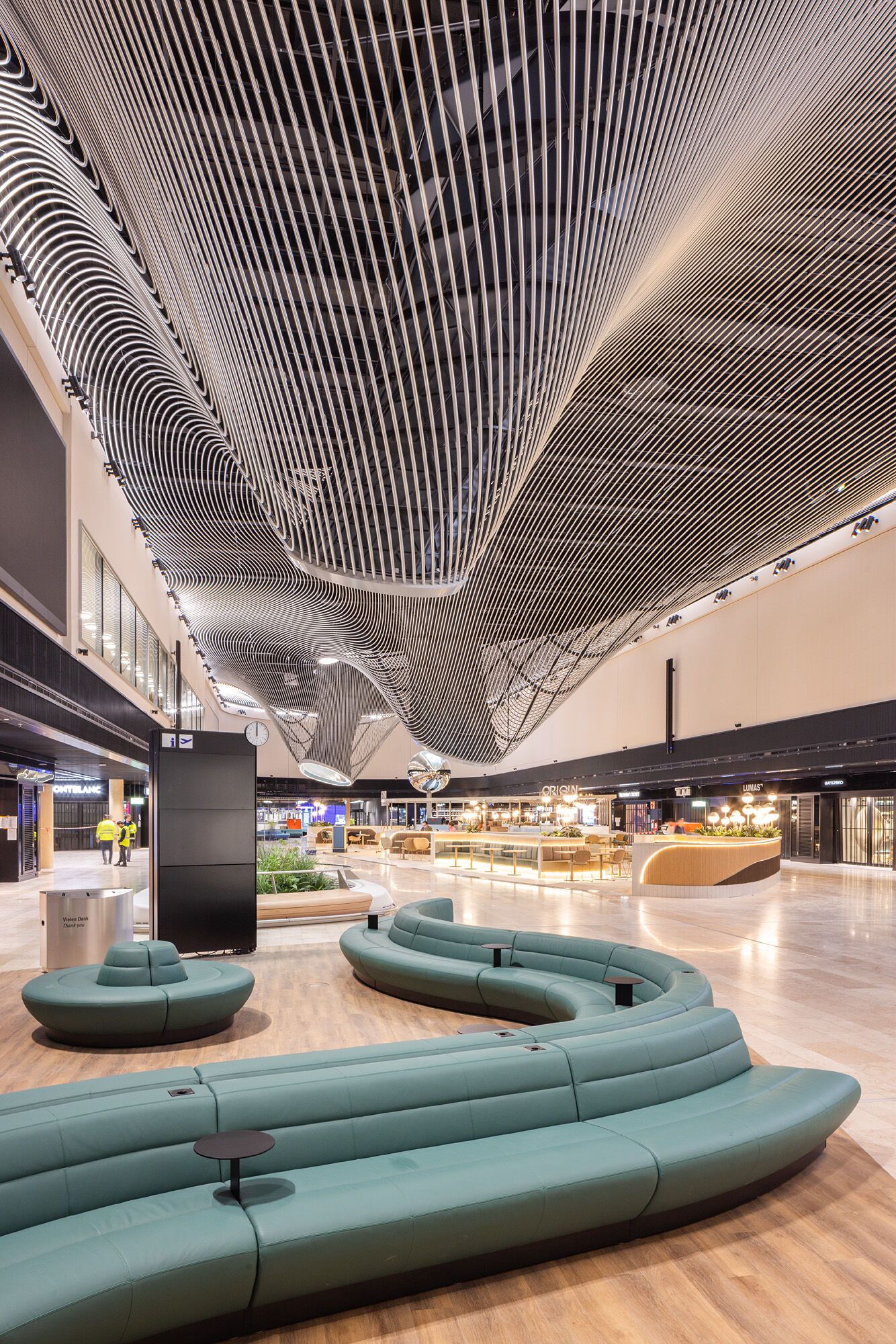
Marketplace with sculptural ceiling
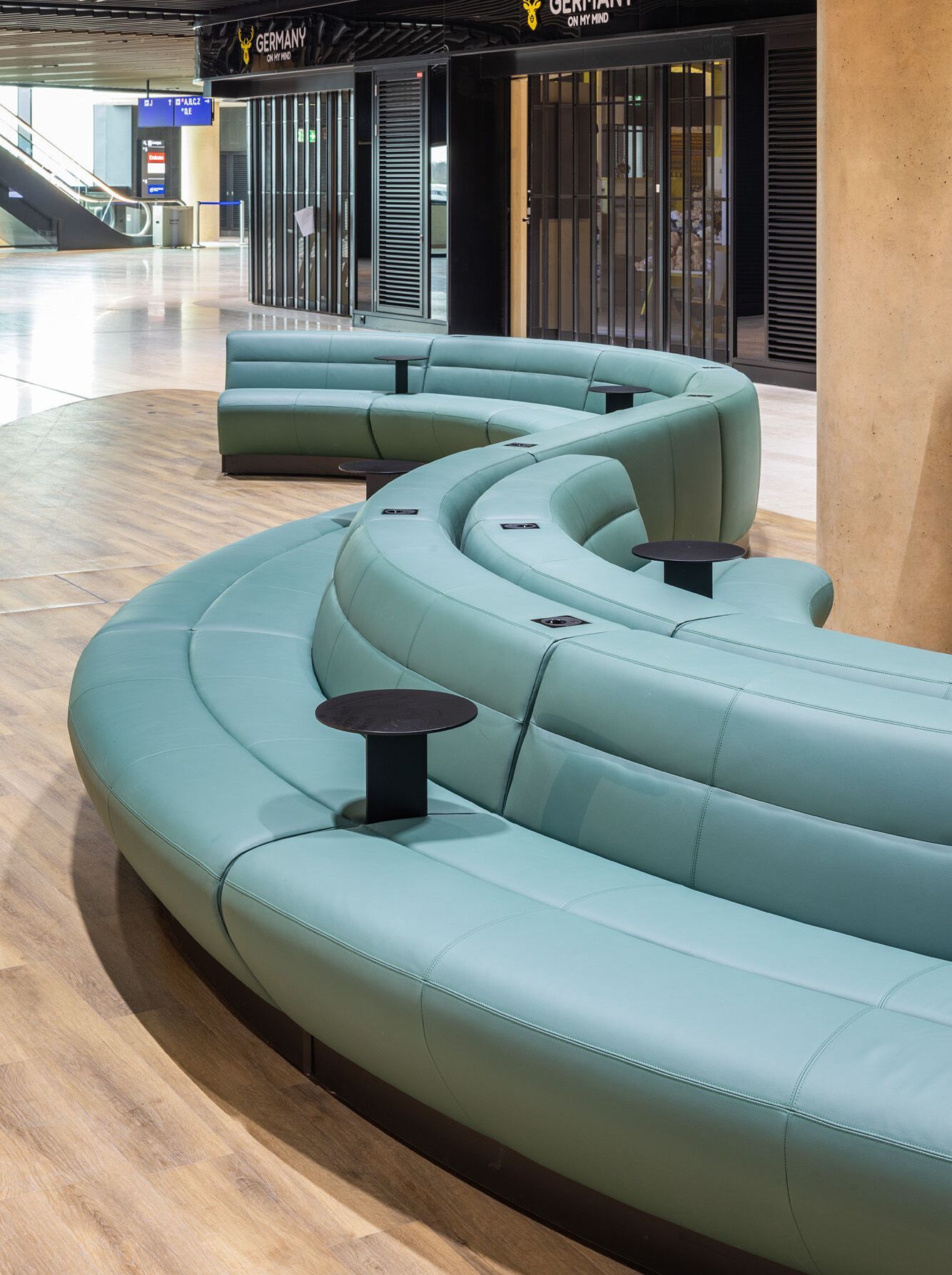
Seating landscapes from Walter K.
The marketplace as a defining spatial experience
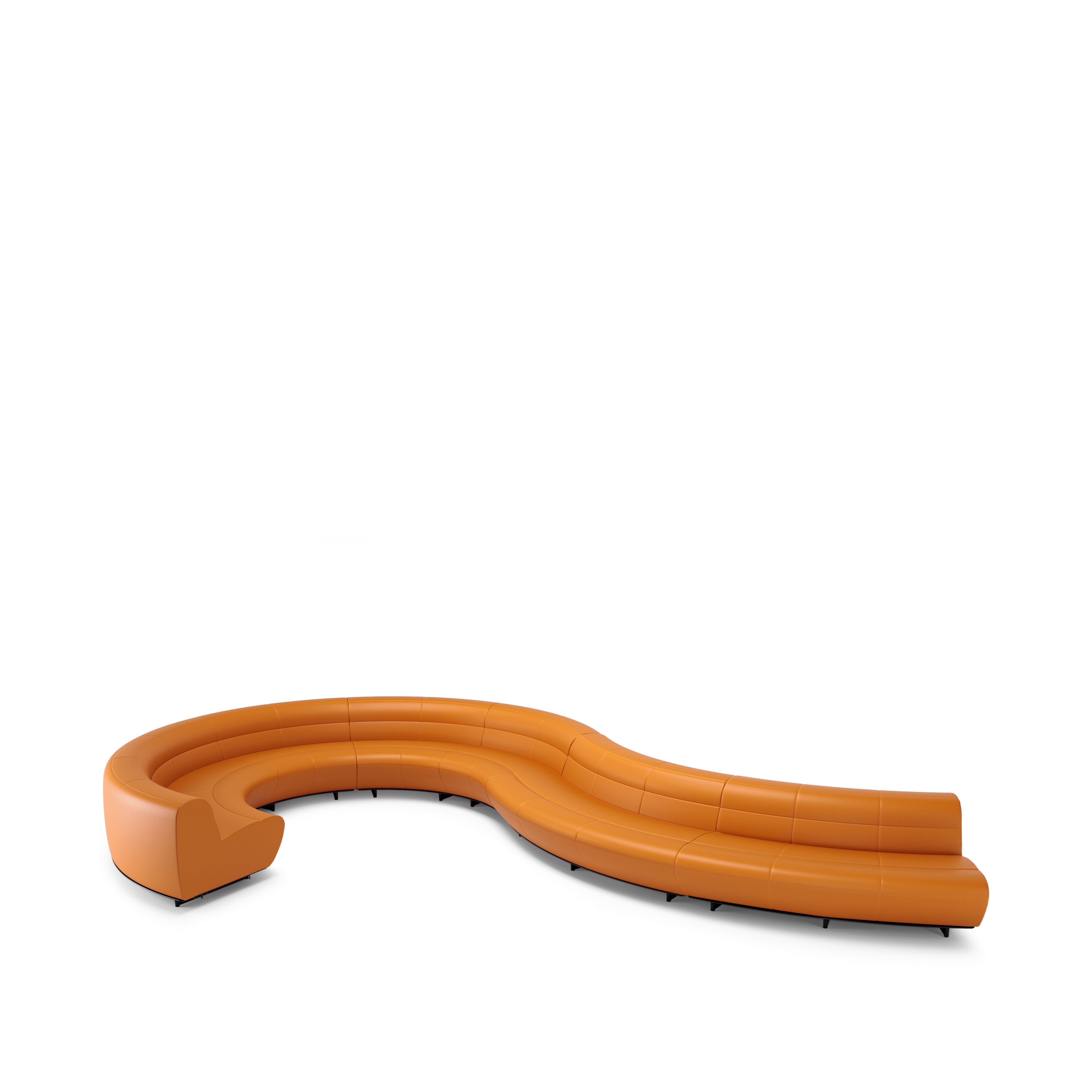
In the international transit area, the marketplace opens up as a new retail and dining experience where lingering, orientation, and onward travel come together. The space is defined by the sculptural droplet ceiling by LAVA (Stuttgart), made from thousands of individually bent aluminum tubes and spanning the open area with a striking presence. Beneath it, curved seating landscapes extend through the space, echoing the flowing language of the architecture.
Reaching lengths of up to 17 meters, these curved seating landscapes create different settings for pausing, exchange, or retreat. Their organic configurations structure the open space while allowing movement to flow through the marketplace. Between dining, retail, and waiting areas, varied opportunities to spend time emerge. The marketplace thus becomes the open and lively center of the terminal.
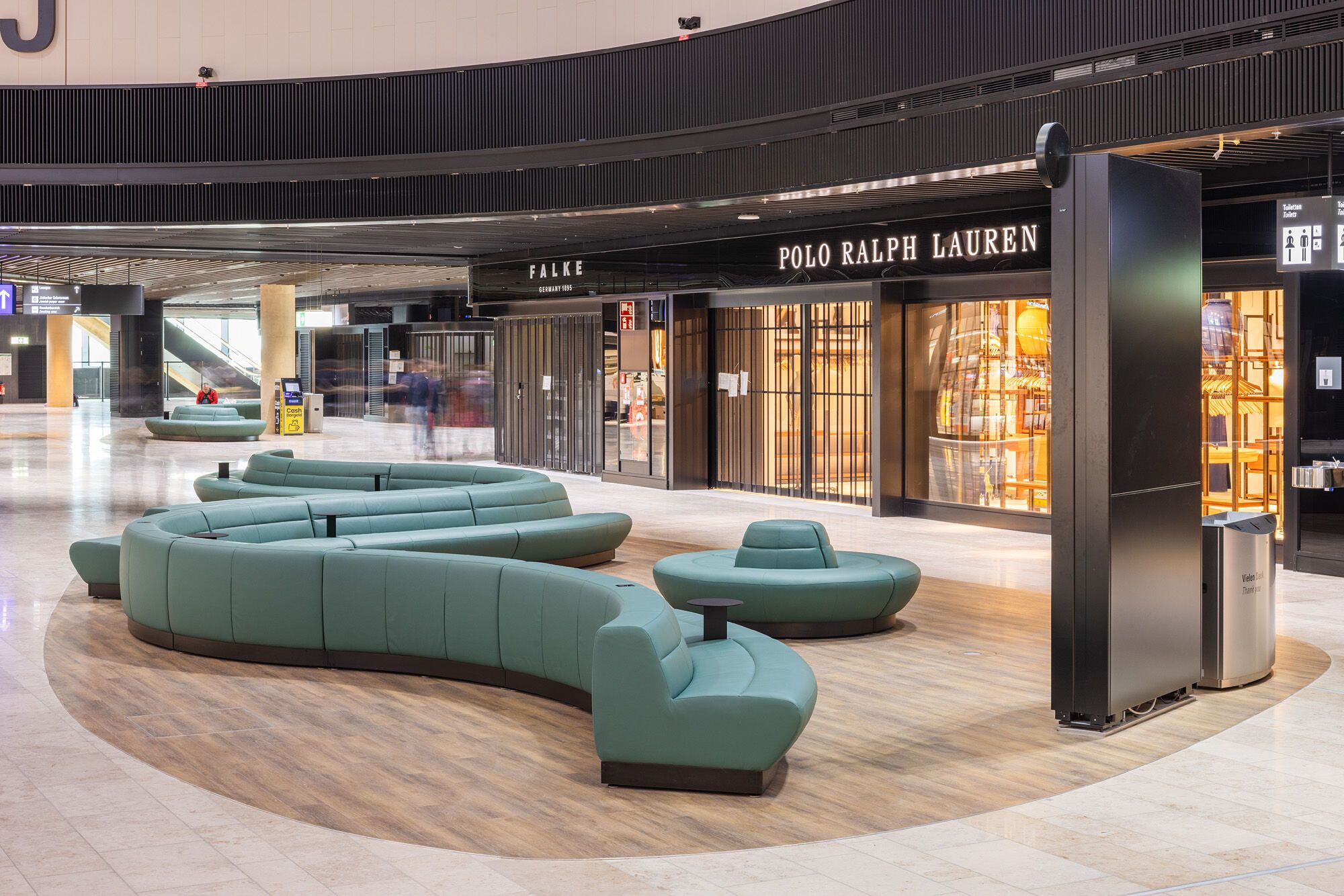
Retail area within Marketplace
"Our goal at Terminal 3 is to make the time our passengers spend here as pleasant as possible in all its different forms. Walter K. developed customized solutions that bring together comfort, functionality, and design, making a substantial contribution to the quality of stay."
Doris Terezinha Rösner, Customer Experience, Fraport AG
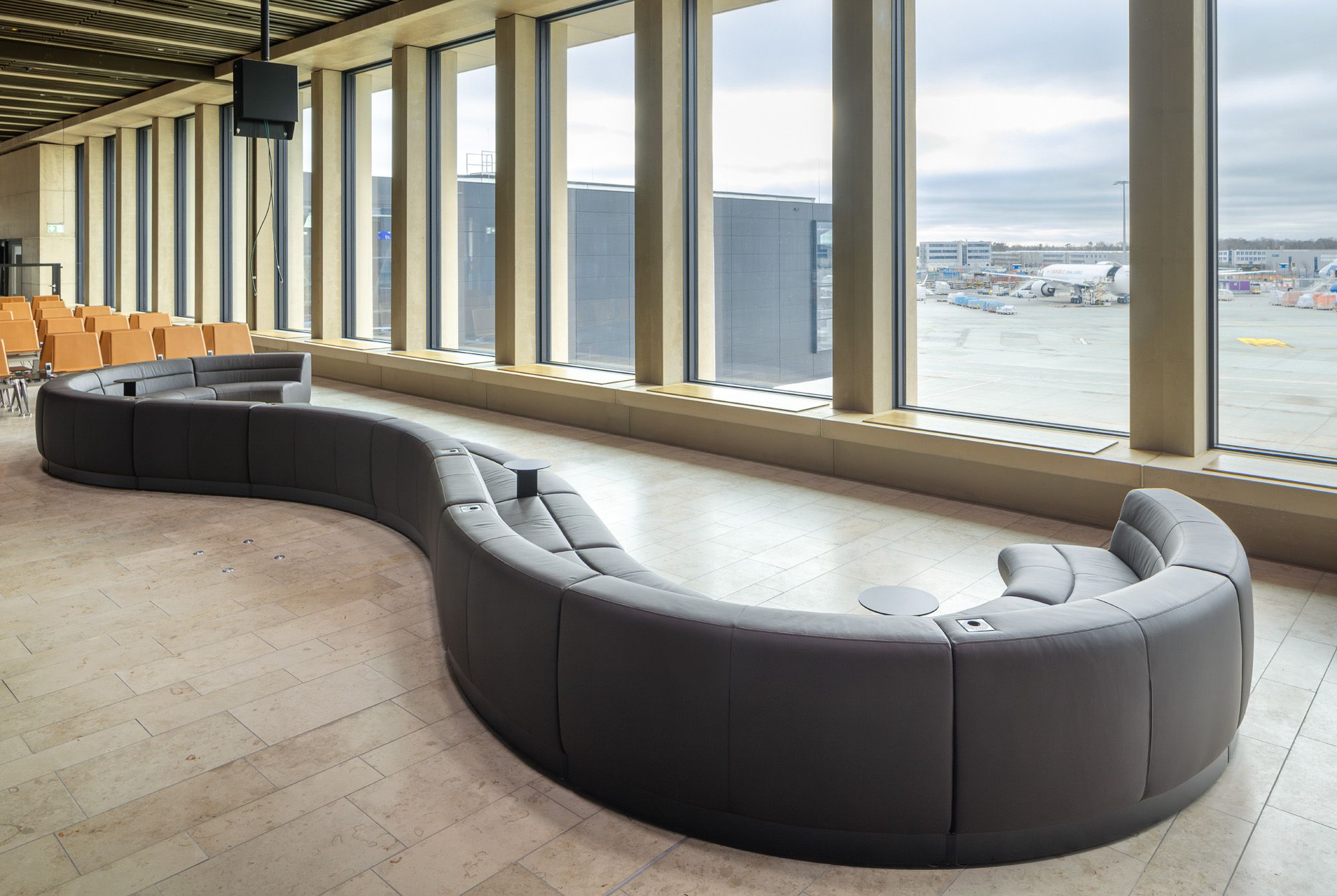
Pier J: Customized Foster 620 Bench with view on the airfield
Customized solutions for complex requirements
The requirements for the furnishings vary throughout the terminal. Accordingly, the form, size, and design of the seating landscapes differ—from linear arrangements to curved configurations and freestanding islands. The basis was the Foster 620 Bench, designed by Norman Foster and further developed specifically for Terminal 3.
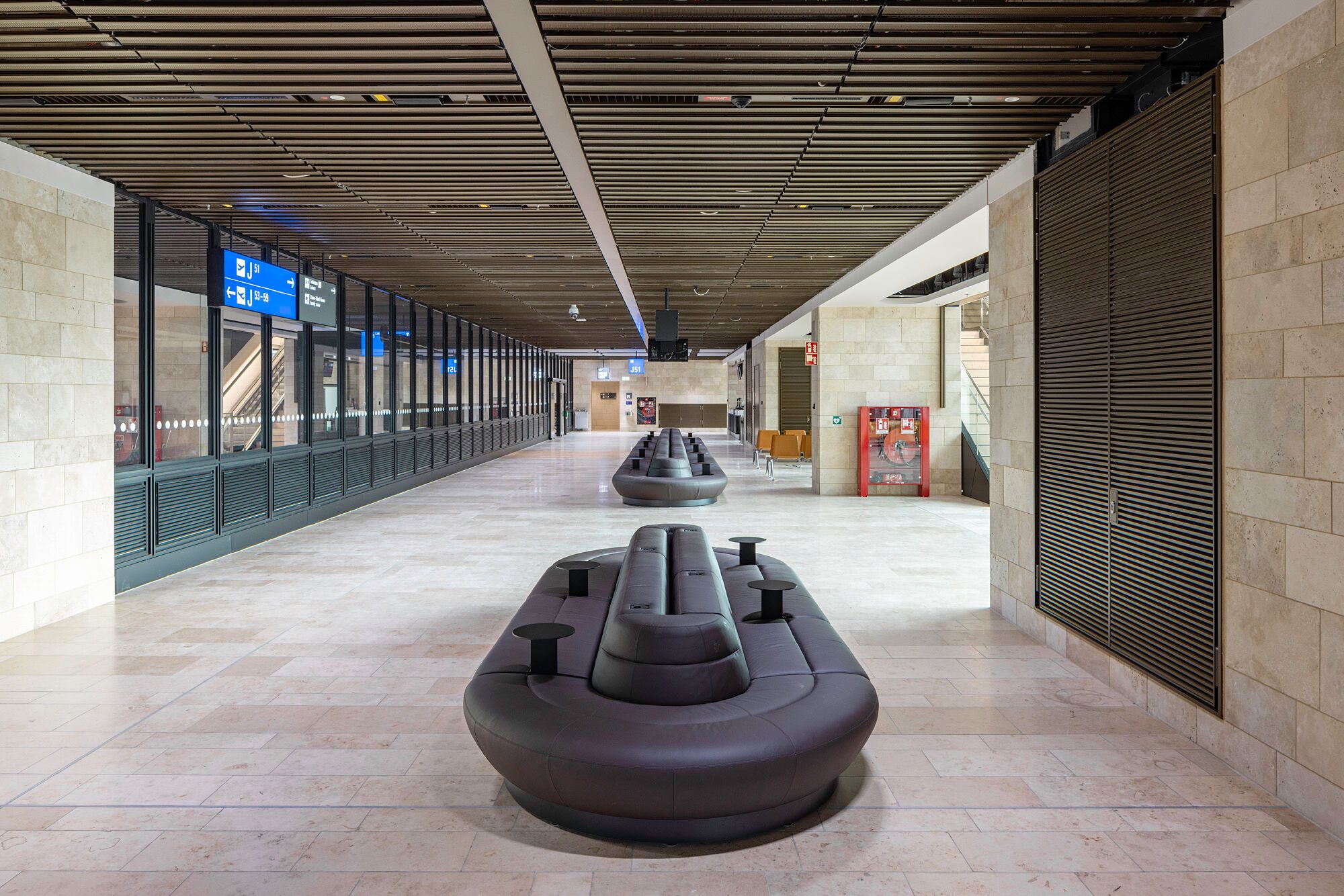
View inside Pier H
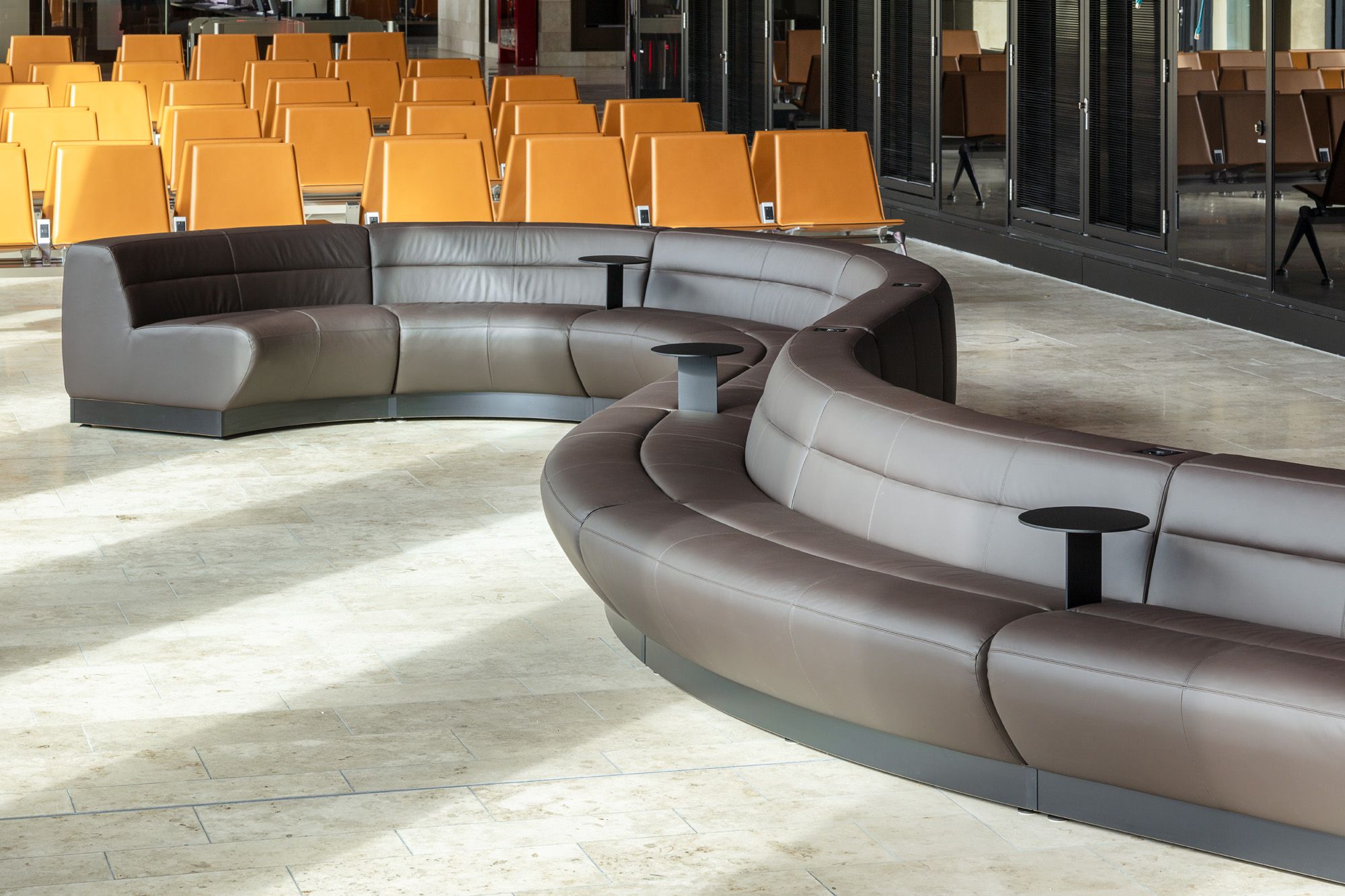
Seating area in Pier J
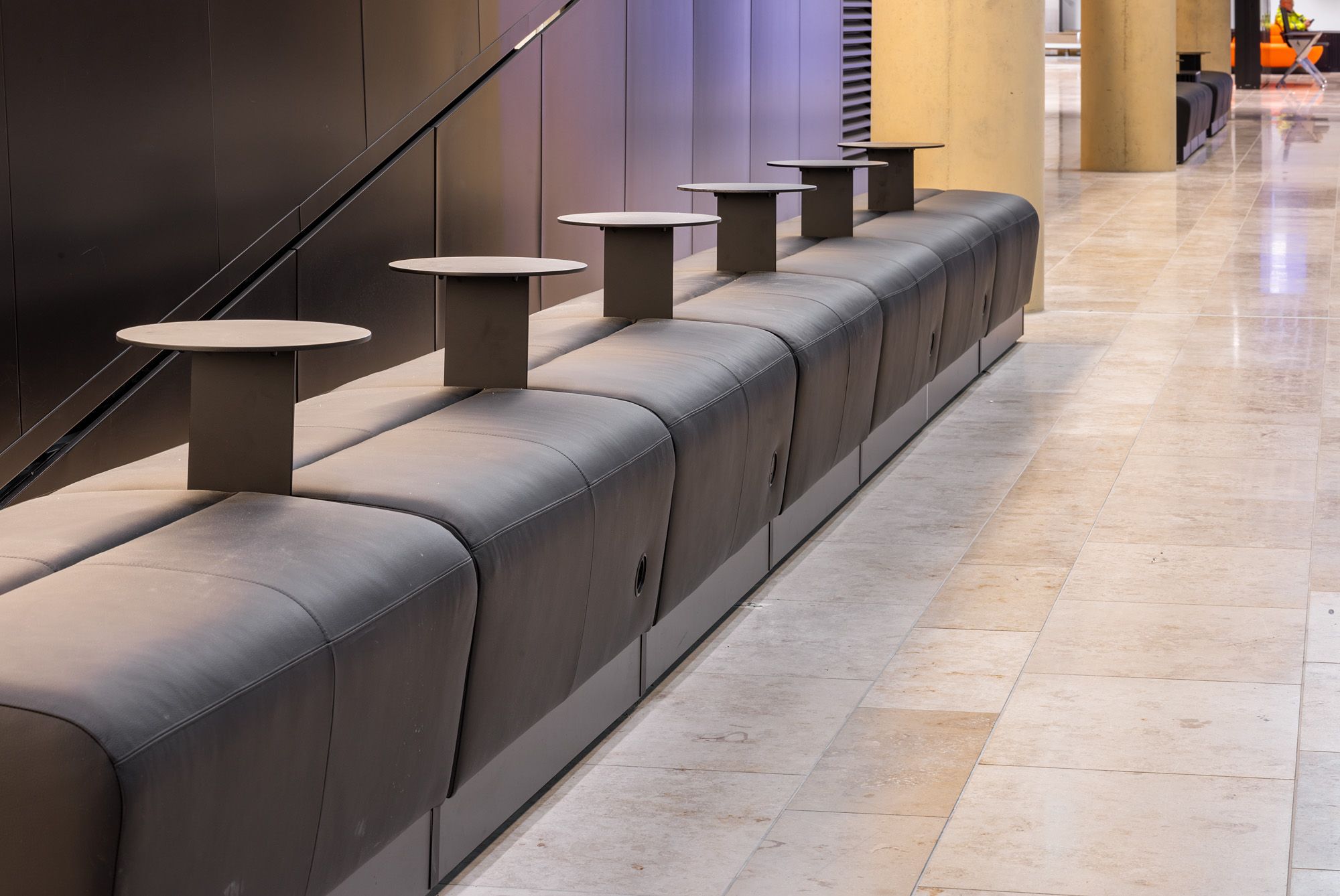
Customized benches in arrival area
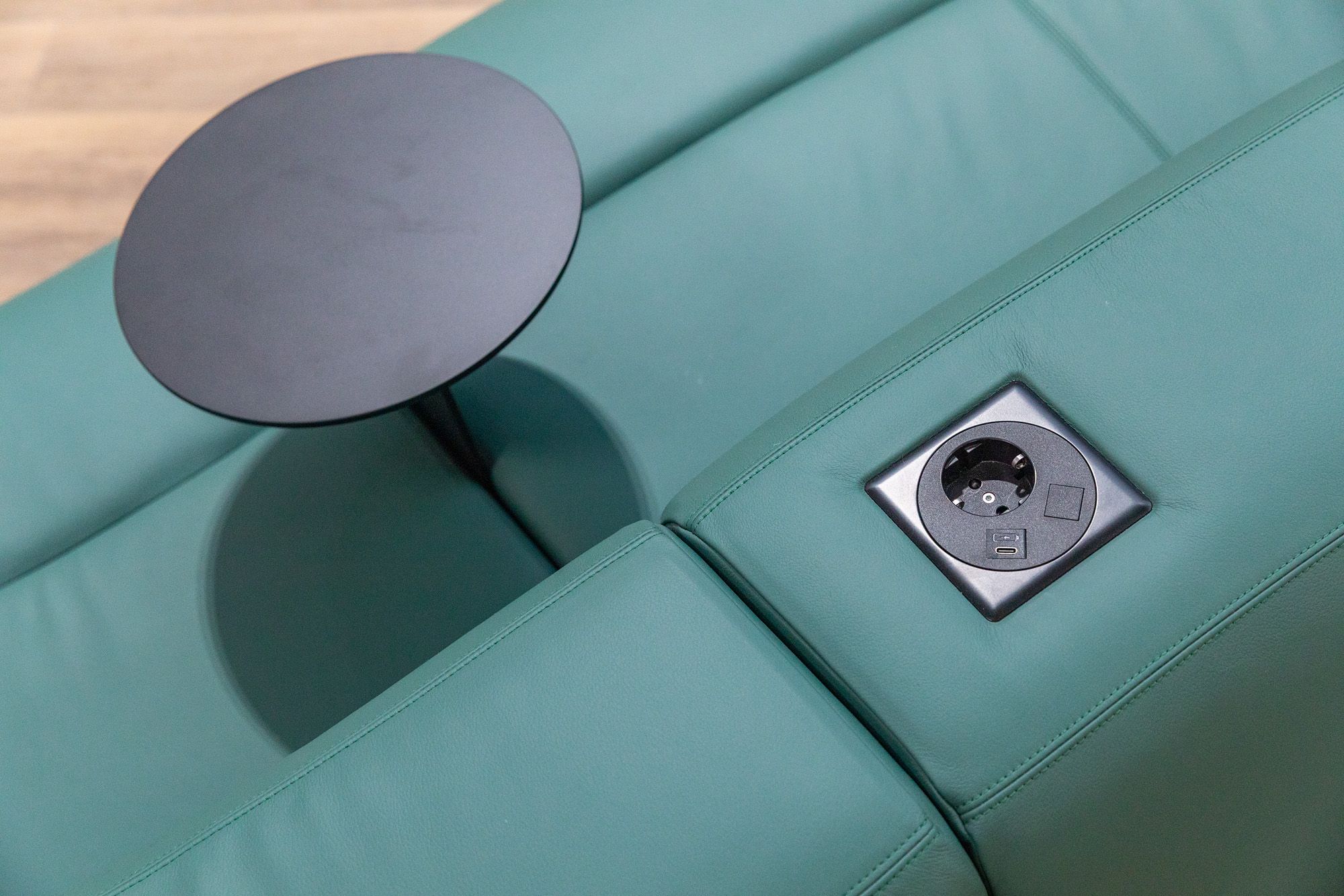
Equipped with a table and power outlets for mobile working
"In an international airport project such as Fraport Terminal 3, seating systems are subject to demanding requirements—from strict fire safety regulations and durability to the integration of a wide range of usage scenarios. Walter K. addressed these complex requirements with individual solutions that combine technical functionality and design quality."
Raphael Orlandi, Terminalinfrastrukturmanagement, Fraport AG
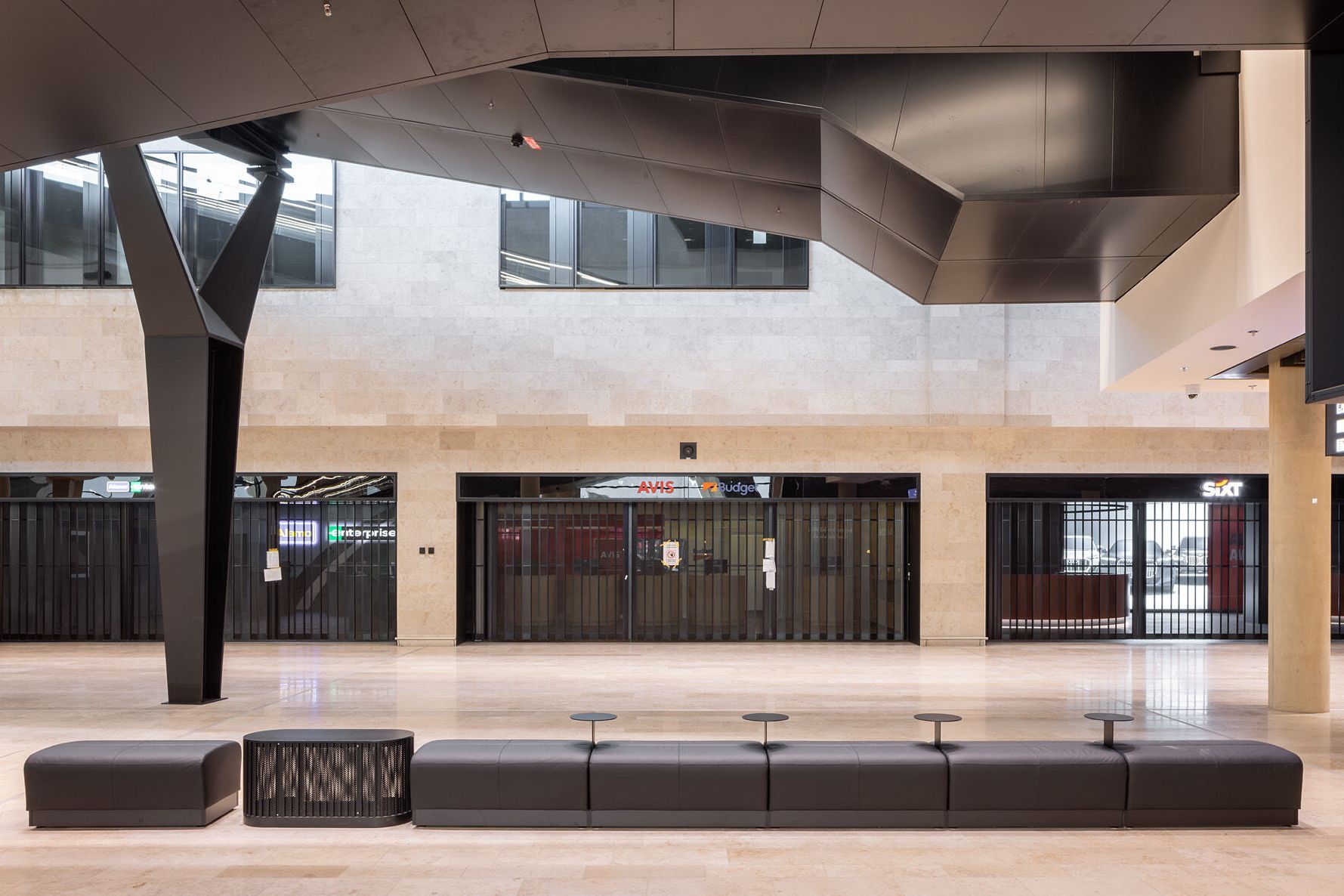
Terminal 3 arrival area
Architecture for people
The architecture of Terminal 3 follows the idea of a city in miniature. Squares, routes, and different zones structure the building and create orientation along the entire journey. Generous daylight, fluid transitions between areas, and a restrained material concept give the terminal a calm atmosphere that deliberately forms a counterpoint to the dynamics of travel. Terminal 3 presents an airport that reinterprets the role of public infrastructure and demonstrates the potential of architecture in shaping public space.
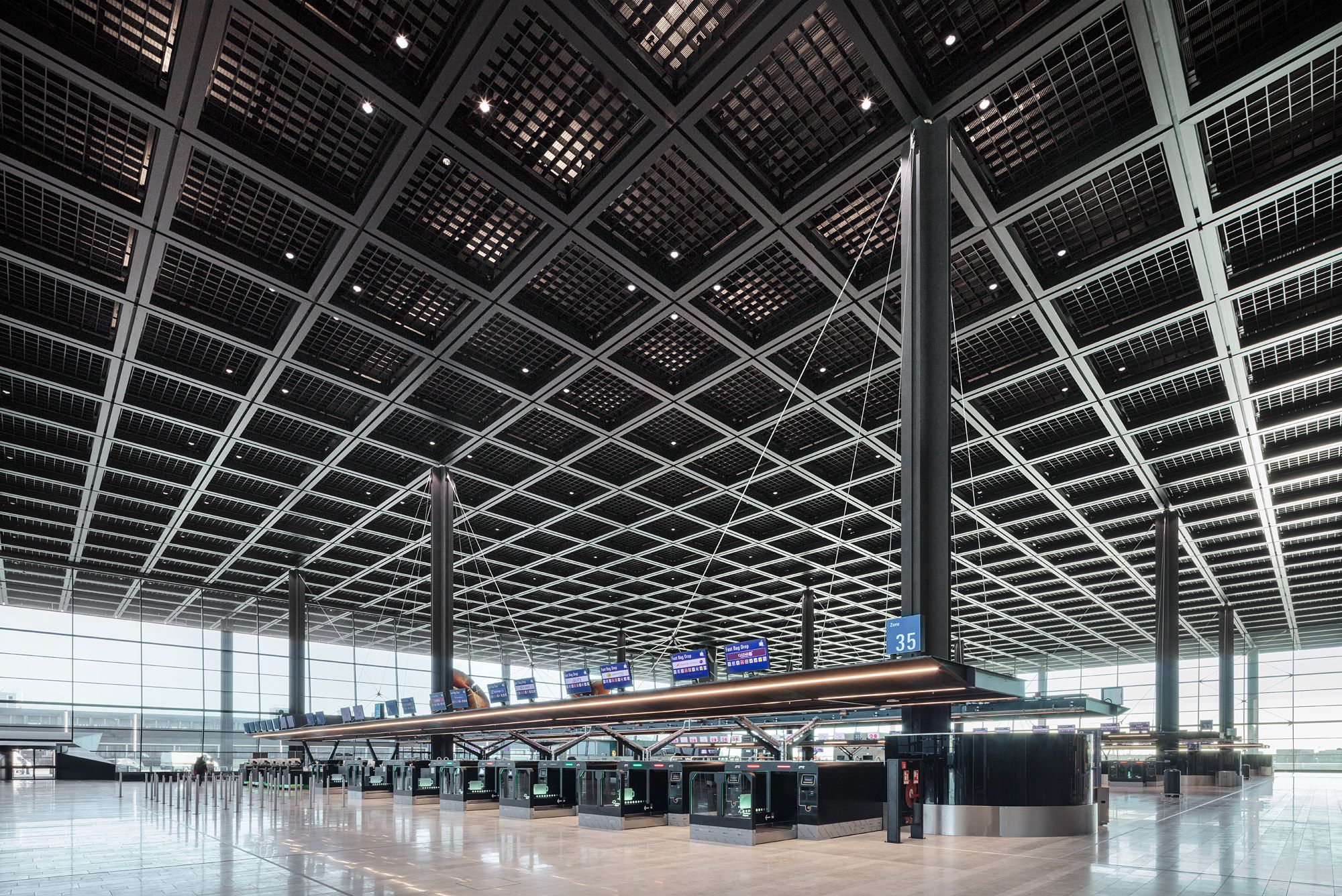
Terminal 3 check-in area
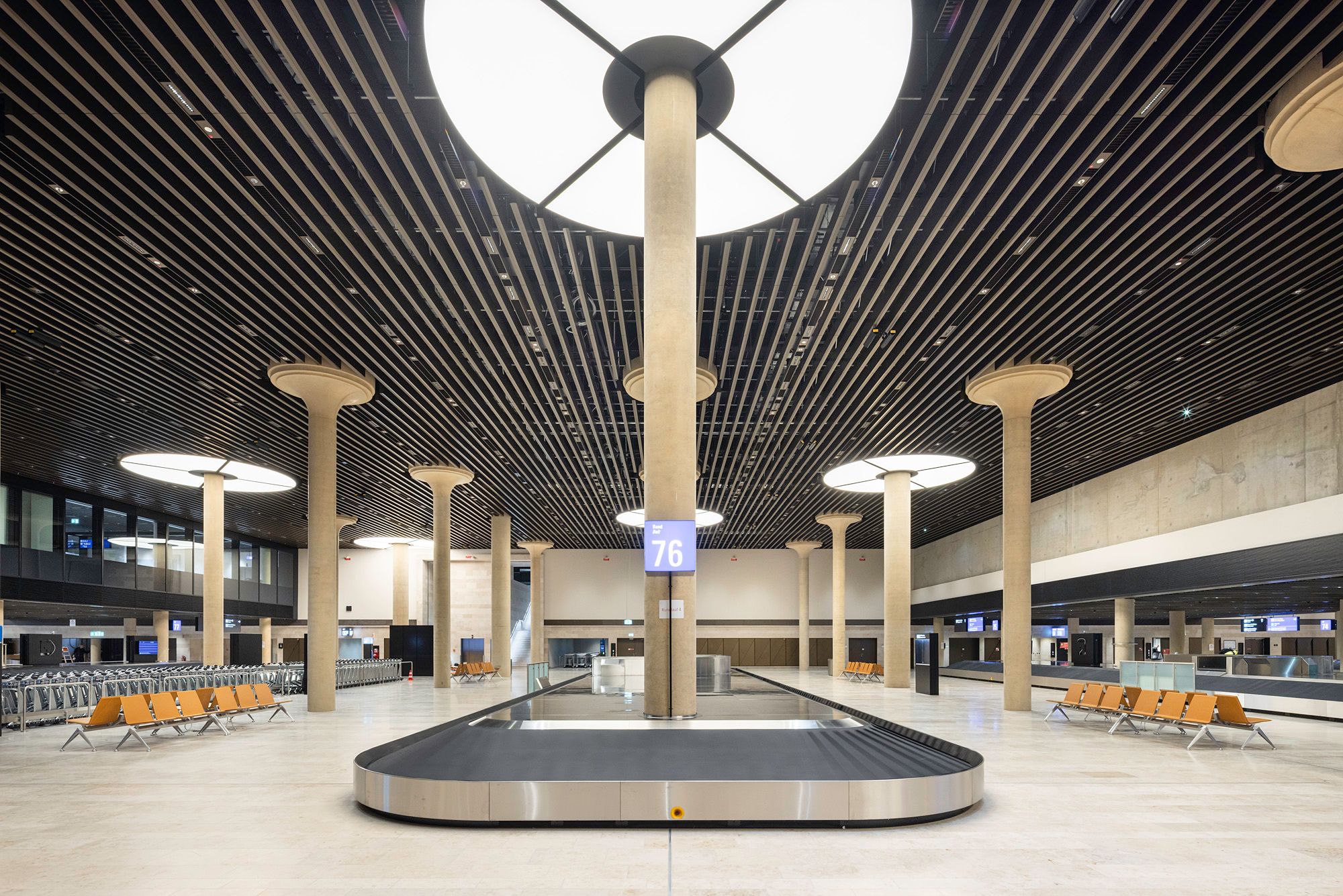
Baggage claim hall